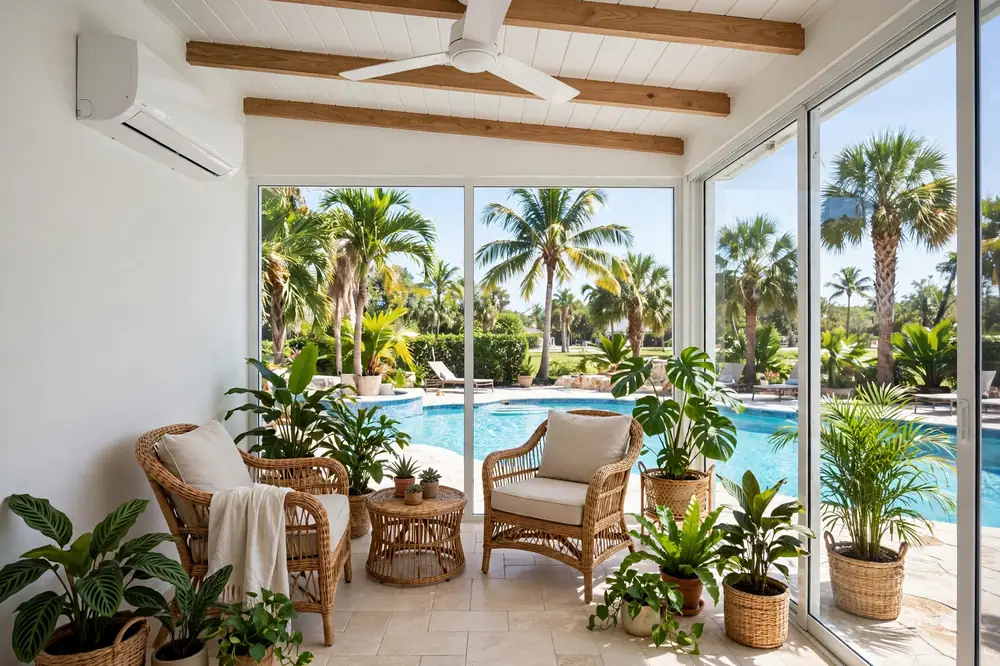
Mini Split for Lanai and Sunroom in Cape Coral, FL
A lanai or sunroom in Cape Coral, FL is a glass room, and a glass room is a greenhouse by midday. A mini split cools and heats it without ducts, sized to the sun load.
Need help with mini split?
Call Now to reach a local mini split professional. Describe the room, the system, and what is happening.
Hours: Mon–Fri 7:00 AM–10:00 PM ET · Sat 8:00 AM–10:00 PM ET · Sun 7:00 AM–9:00 PM ET
What this service does
A lanai or sunroom is the room that central air never reached, and the room that needs cooling the most. It has glass on two or three sides, a roof that takes full sun, and little or no insulation in the walls. By midday in a Cape Coral, FL summer it is a greenhouse — and by a January morning it is the coldest room in the house. A mini split is the answer that fits a lanai, because it needs no ductwork, it is sized to the sun load, and it cools and heats with the same unit.
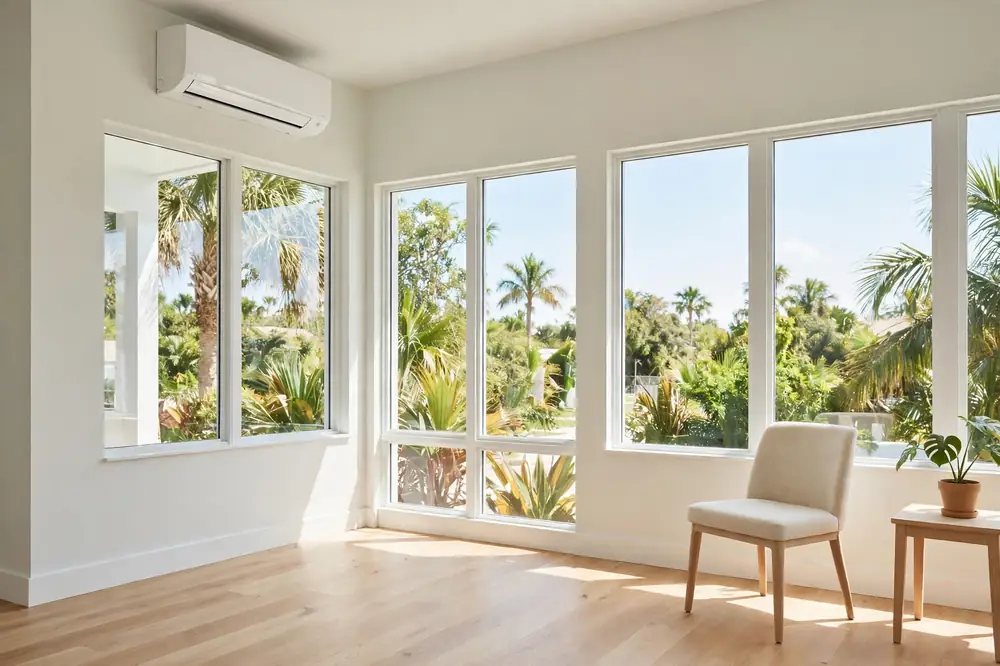
The load check for a lanai is different from the load check for any other room, and that difference is the whole job. A lanai has more glass per square foot than any other room in the house, and glass gains heat fast. The direction the glass faces matters: a west-facing lanai takes the afternoon sun, and the afternoon sun is the hottest sun. The roof matters too: a lanai with a solid roof gains less heat than a lanai with a glass roof, and a lanai with a shade screen gains less than one without. The load check counts the glass, the direction, the roof and the use, and the unit is sized to that load — a unit copied from a bedroom of the same floor area will run all day and never catch up.
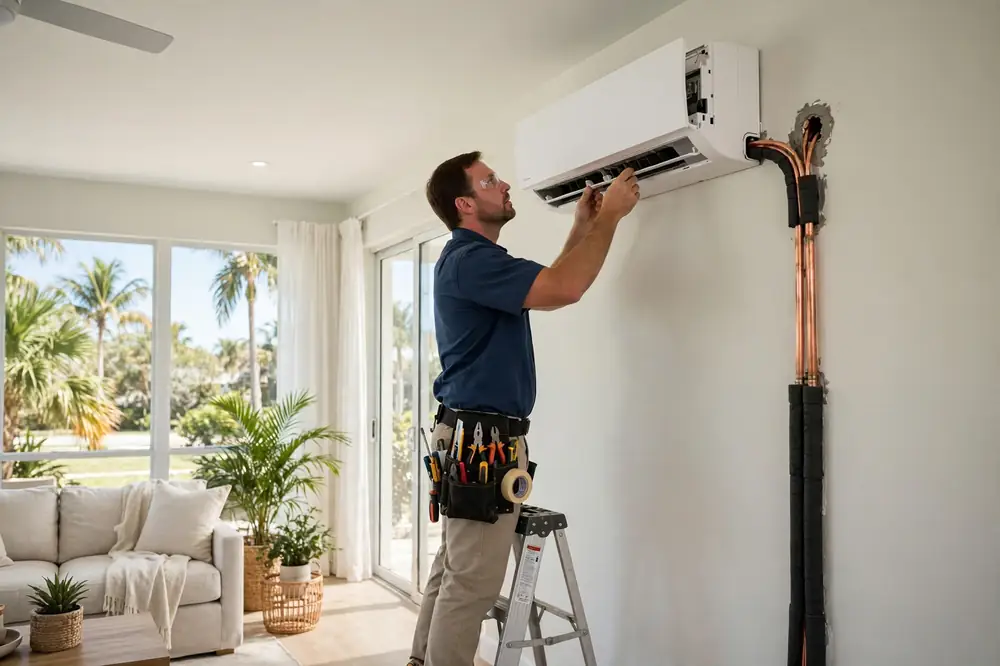
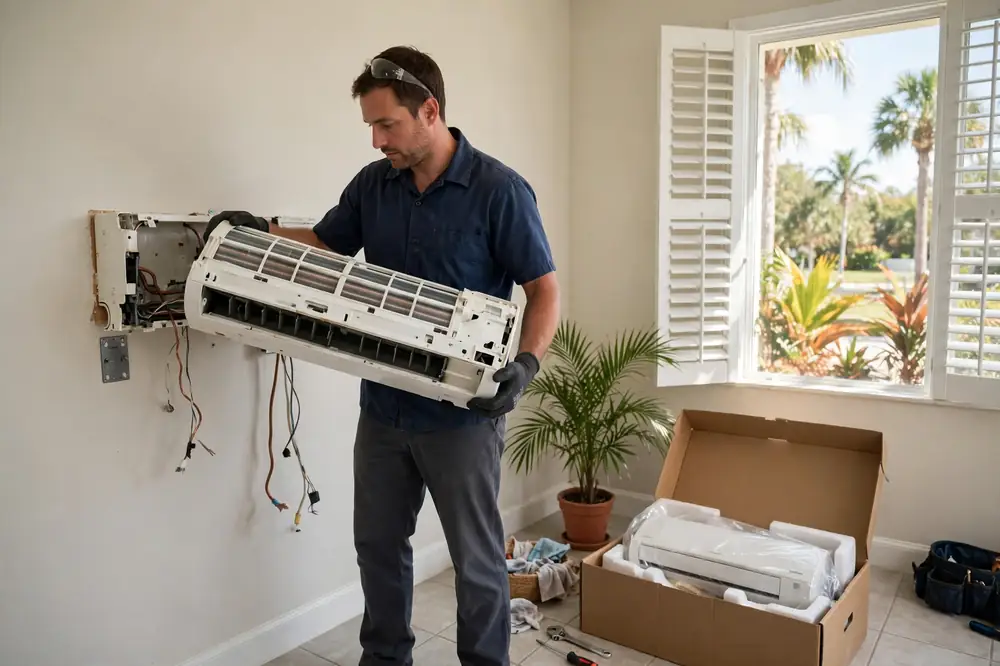
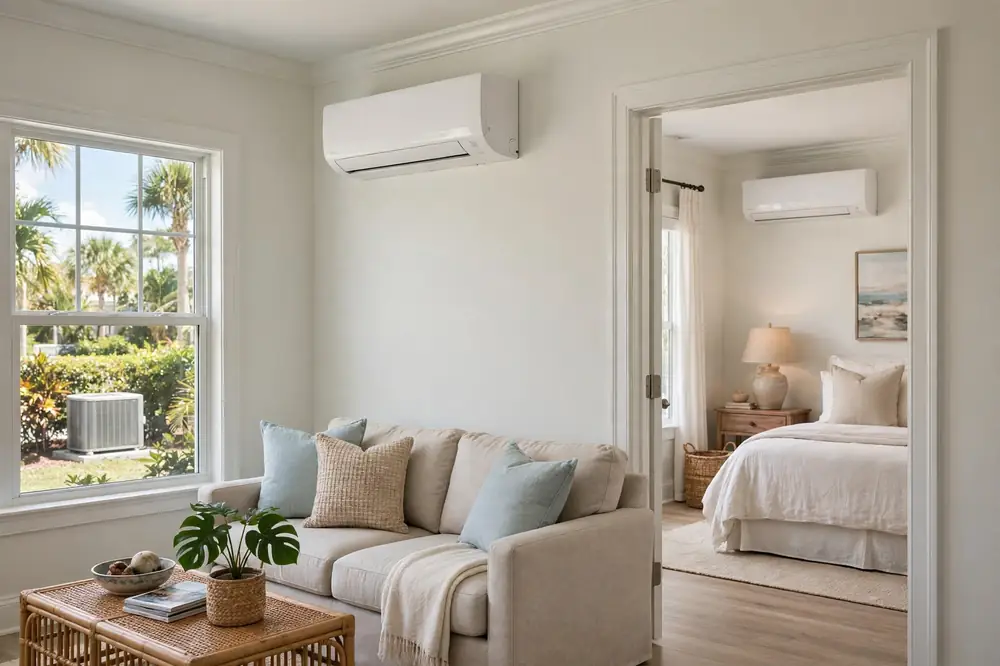
The install follows the same sequence as any ductless install, with two lanai-specific details. The indoor unit mounts high on a wall, where it can throw air across the room without blowing directly onto people sitting below it — and in a lanai the wall space is often taken up by glass, so the mounting spot is chosen with the glass in mind, and a ceiling cassette or a floor-mounted unit is the answer where the wall space is not there. The outdoor unit sits on a pad, a wall bracket or an elevated platform, anchored to a wind-rated mount with corrosion-resistant hardware, and elevated above expected flood levels.
The permits are the same — mechanical and electrical — and the handover explains the remote, the modes and the filter. The lanai keeps its own temperature from the first day it is used, and the room that was a greenhouse by midday becomes a room that is used all day. The lanai-cooling post on this site explains the glass-room picture in full.
Before you call
- Note which room the unit serves and what it is doing — or not doing.
- Check the remote: mode, temperature setting, and whether the display responds.
- Look at the indoor filter and the outdoor unit for leaves, dirt or standing water.
- Note when the problem started and whether it followed a storm or a power outage.
- Check whether your HOA or condo association needs to approve outdoor equipment.
How a mini split for a lanai or sunroom works in Cape Coral, FL
The load check for a lanai counts the glass first. The glass area, the direction it faces, and the roof above it are the three numbers that decide the size. A west-facing lanai takes the afternoon sun, and the afternoon sun is the hottest sun. A lanai with a glass roof gains more heat than a lanai with a solid roof. A lanai with a shade screen gains less than one without. The room is measured — length, width and ceiling height — and the glass, the direction, the roof and the use are counted. The unit is sized to that load.
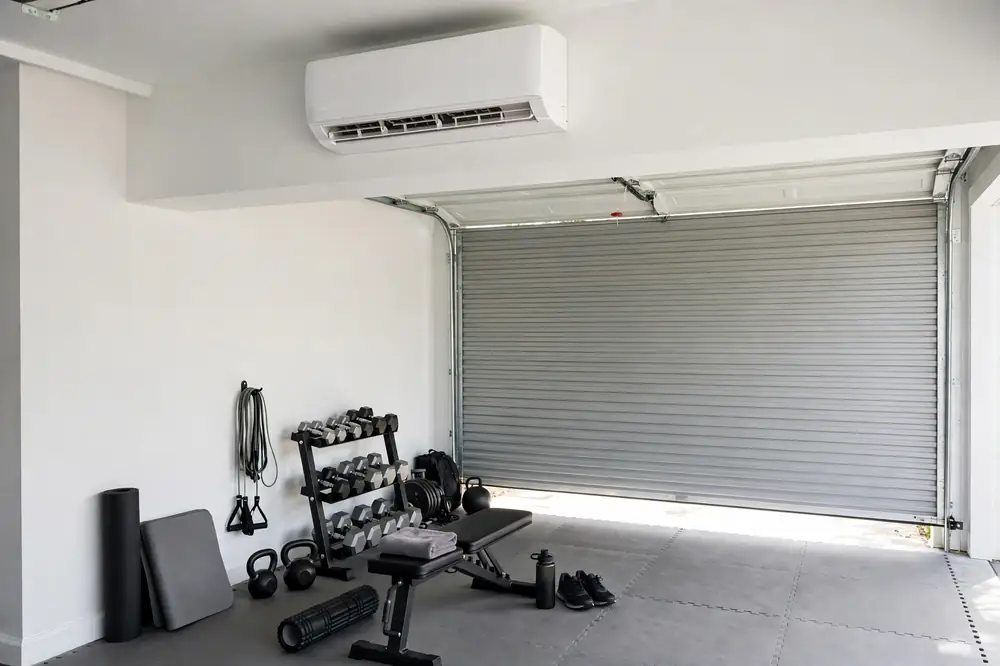
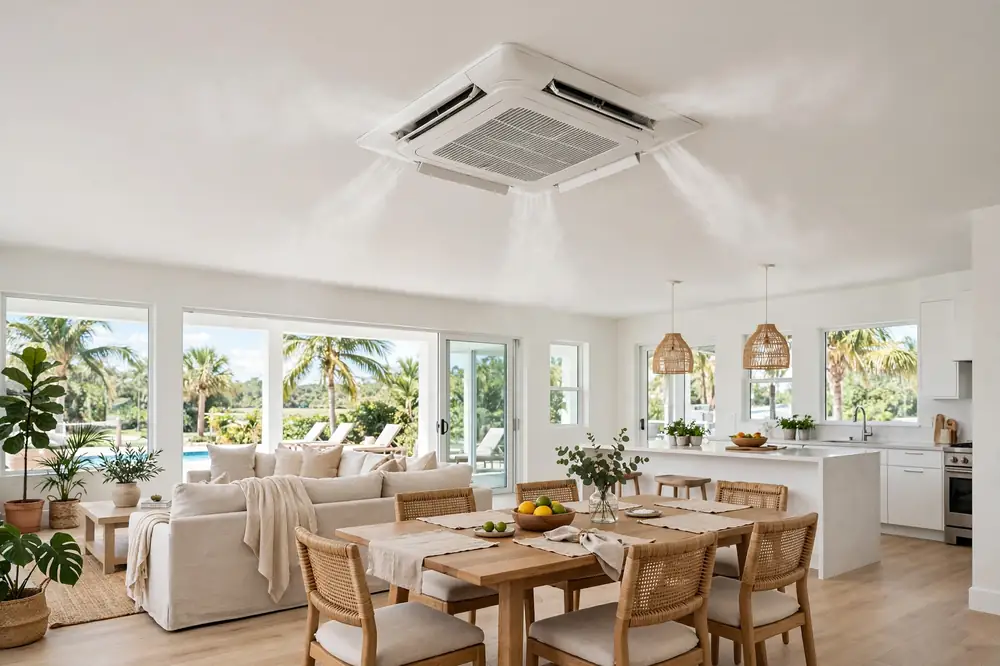
The indoor unit mounts high on a wall, where it can throw air across the room without blowing directly onto people sitting below it. In a lanai the wall space is often taken up by glass, so the mounting spot is chosen with the glass in mind. A ceiling cassette fits a lanai with a solid ceiling and little wall space. A floor-mounted unit fits a lanai with low walls and a lot of glass. The indoor unit type is decided by the room, not by habit — and the lanai is the room where the choice matters most.
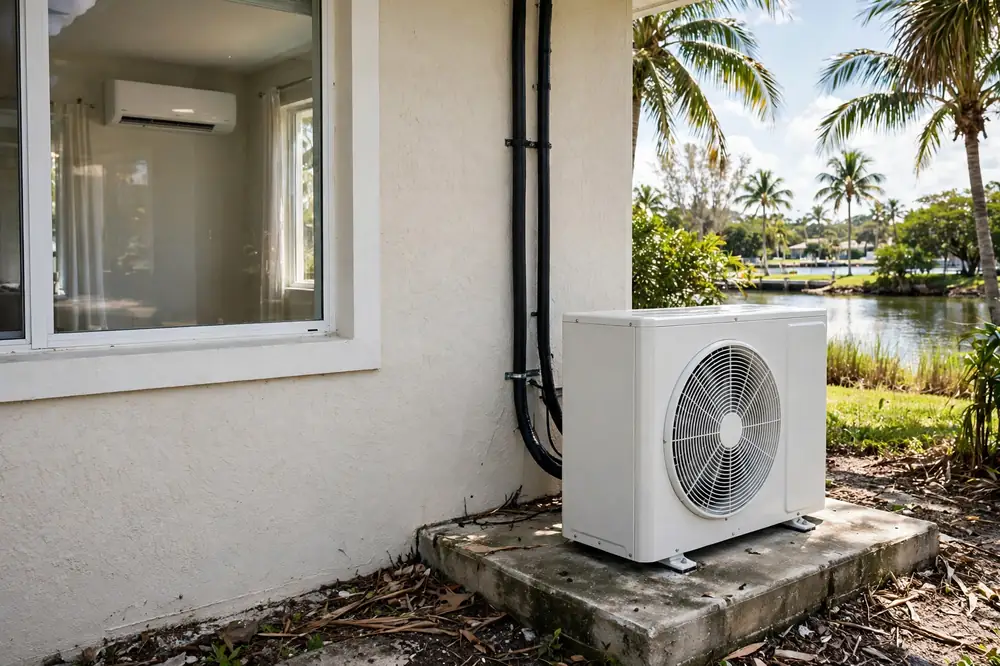
The line set runs from the indoor unit to the outdoor unit through a small opening in the wall. The copper lines are insulated, the drain line runs downhill so condensate flows away from the house, and the opening is sealed against rain, insects and humid air. The outdoor unit sits on a pad, a wall bracket or an elevated platform, with clearance on all sides for airflow and for service, out of direct salt spray where possible, and anchored to a wind-rated mount with corrosion-resistant hardware. A lanai is often at the back of the house, close to the water, so the outdoor unit gets coastal corrosion protection.
The electrical work is a dedicated 208/230V circuit, with a disconnect box near the unit, covered by a separate electrical permit under NEC Article 440. The panel is checked for a spare circuit and for capacity before the work starts. Testing is the last step: the line set is pressure-tested, vacuumed and charged, and the system is run through Cool, Heat and Dry modes while airflow, temperature drop and the drain are checked. Dry mode matters most in a lanai, because a glass room is a humid room, and Dry mode is the mode that pulls moisture out of the air.



What the service includes
Lanai load check
The lanai is measured and the load is checked — glass area and direction, roof, shade and use — so the unit is sized to the sun load.
Indoor unit mounting
The indoor unit is mounted high on the wall, or as a ceiling cassette or floor-mounted unit where the wall space is glass.
Line set and drain run
Copper refrigerant lines, drain line and control cable run through a small sealed wall opening to the outdoor unit.
Outdoor unit placement and anchoring
The outdoor unit is set on a pad, bracket or elevated platform, anchored to a wind-rated mount with corrosion-resistant hardware.
Electrical circuit and disconnect
A dedicated 208/230V circuit and a disconnect box near the unit, covered by a separate electrical permit.
Pressure test, vacuum and charge
The line set is pressure-tested, vacuumed and charged with refrigerant before the system runs.
Salt-air protection
Coastal corrosion protection on the outdoor unit for homes near the Gulf and the saltwater canals.
Testing in every mode
The system is run through Cool, Heat and Dry modes while airflow, temperature drop and the drain are checked.
Permit and inspection
Mechanical and electrical permits are pulled before work starts, and the inspection is arranged after.
How the work runs
Call and describe the lanai
How big it is, how much glass it has, which way it faces, what roof it has, and when it is used.
Assessment and sizing
The lanai is measured and the load is checked, so the unit is sized to the sun load.
Permits
Mechanical and electrical permits are pulled before work starts.
Installation
The indoor unit is mounted, the line set and drain are run, and the outdoor unit is set, anchored and connected.
Testing
The system is pressure-tested, vacuumed, charged, and run through cooling, heating and Dry modes.
Handover
The remote, the modes and the filter are explained, and the inspection is arranged.



Tools and methods used
Load calculation
A load check that turns the lanai — glass area and direction, roof, shade and use — into the right unit size.
Torque wrenches and flaring tools
Flaring tools shape the copper line ends, and torque wrenches tighten the flare nuts to the right tension — too loose leaks, too tight cracks.
Nitrogen pressure test
The line set is filled with nitrogen and held at pressure, so a leak shows up before refrigerant goes in.
Vacuum pump and micron gauge
A vacuum pump pulls air and moisture out of the line set, and a micron gauge confirms the vacuum holds.
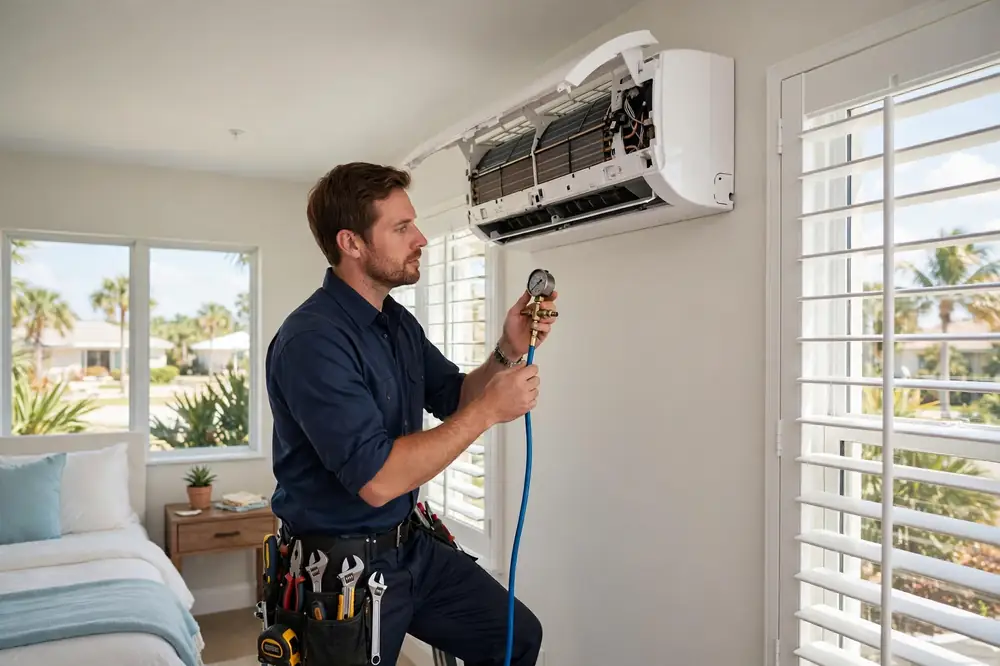
Refrigerant gauges
Gauges read the system pressures while the unit runs, confirming the charge is right.
Level and core drill
A level keeps the indoor unit straight so the drain flows, and a core drill makes the small, clean wall opening for the line set.

The glass room: why the sun load decides everything
A lanai carries a bigger load per square foot than any other room in the house, and the glass is the reason. Glass gains heat fast, and a lanai has more glass per square foot than any other room. The direction matters: a west-facing lanai takes the afternoon sun, and the afternoon sun is the hottest sun. The roof matters: a glass roof gains more heat than a solid roof. The shade matters: a shade screen cuts the gain. The load check counts all of it, and the unit is sized to the sum.
The mistake is sizing a lanai like a bedroom. A unit copied from a bedroom of the same floor area will run all day and never catch up on a hot afternoon, and the owner will conclude that a mini split cannot cool a lanai — when the fault was the sizing, not the system. The load check is the answer, and it is done on the lanai as it is, with the glass, the direction, the roof and the shade all counted. The lanai-cooling post on this site explains the glass-room picture in full.
Dry mode: the mode that matters most in a glass room
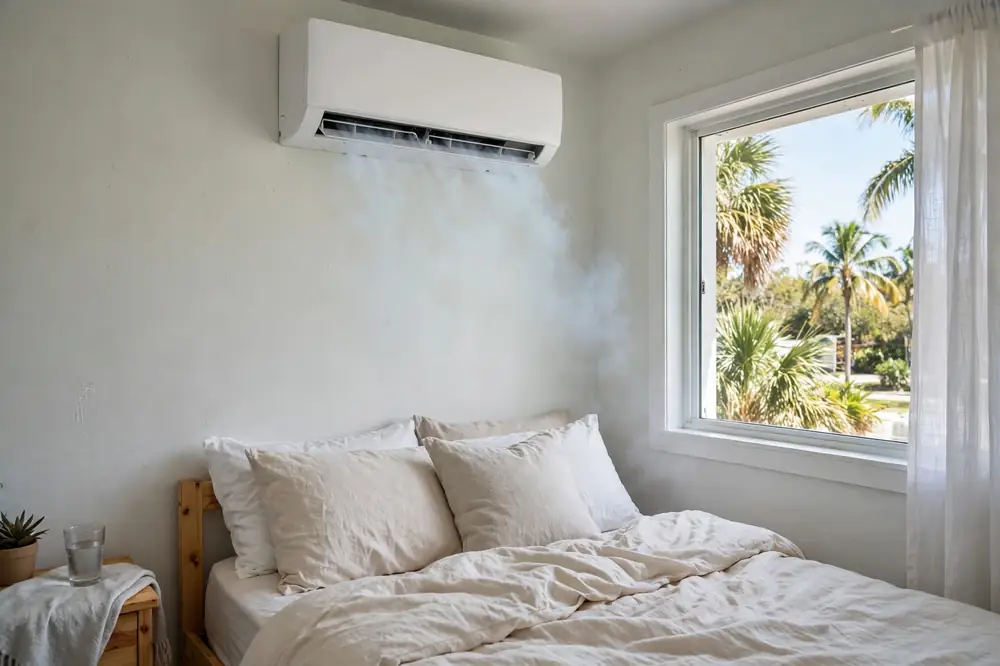
A lanai is a humid room, and Dry mode is the mode that matters most in it. Dry mode runs the coil cold and the fan slow, so moisture condenses on the coil and drains away, and the room feels cooler without getting much colder. In a Florida home the humidity is the discomfort as much as the heat, and a lanai with glass on three sides is the room where the humidity is felt first.
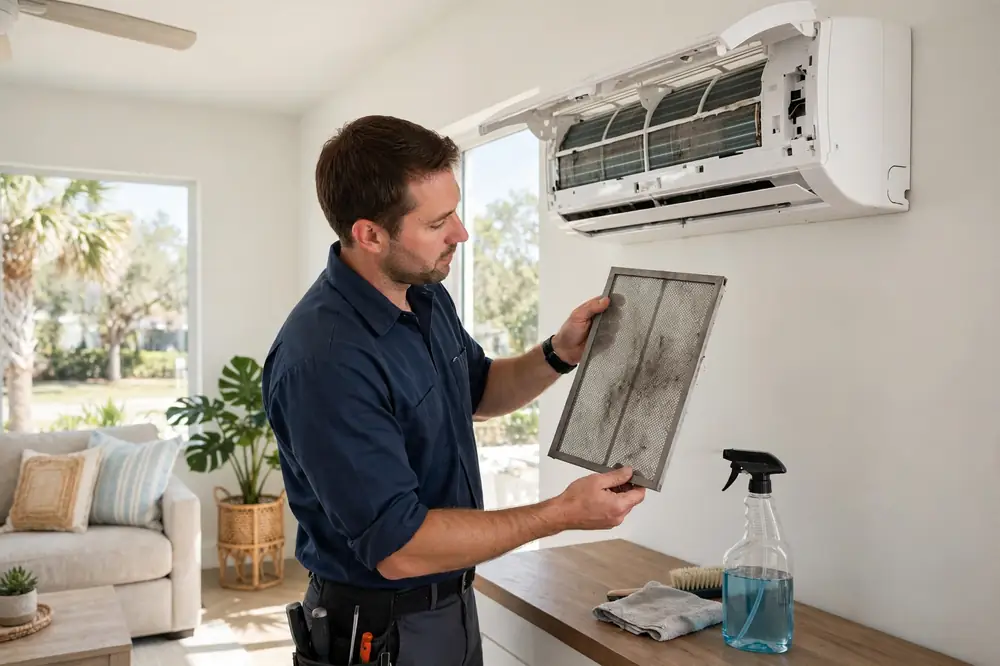
Dry mode only works when the coil and the filter are clean. A dirty coil cannot pull moisture out of the air, and a clogged filter cannot move the air across the coil. The filter is the owner job — it comes out, rinses and goes back in — and the coil is the maintenance-visit job. A lanai mini split with a clean filter and a clean coil dehumidifies the way it did when it was new, and the room that was a greenhouse by midday becomes a room that is used all day.
A lanai in Cape Coral with glass on three sides that is a greenhouse by midday, unusable by afternoon, and cold on a January morning.
A room that stays warm, damp or noisy does not fix itself — and the cause is usually small: a dirty filter, a clogged drain, or a unit sized wrong for the room.
One indoor unit sized to the sun load, an anchored outdoor unit, and a glass room that holds its own temperature all day, in summer and in winter.
The work is checked in the room, at the thermostat and at the outdoor unit — not guessed from the driveway.
Guides and posts that go with mini split for lanai and sunroom
Signs your lanai or sunroom needs a mini split
- A lanai that turns into a greenhouse by midday and is unusable by afternoon.
- A sunroom that is the coldest room in the house on a January morning.
- A lanai where the ceiling fan pushes hot air around and the room never cools.
- A glass room that is used in the evening but cannot be used in the day.
- A lanai where plants, furniture and fabric suffer in the heat and humidity.
- A sunroom that was built as living space but never got cooling.
- A lanai that needs its own temperature, separate from the main house.
- A glass room where a window unit would block the view and the light.
Related guides
Mini split lanai cooling · Mini split sizing guide · Mini split humidity guide
Industries that use this service
Residential · Hospitality & Restaurants · Real Estate · All industries →
Frequently asked questions
Questions people ask about mini split for lanai and sunroom, answered plainly.
Yes. A lanai is the classic mini split retrofit, because it needs no ductwork and it is sized to the sun load. The load check counts the glass area and direction, the roof and the shade, so the unit is sized to the load a glass room carries. A unit copied from a bedroom of the same floor area will run all day and never catch up — the load check is the difference.
By a load check that counts the glass first: the glass area, the direction it faces, and the roof above it. A west-facing lanai takes the afternoon sun, and the afternoon sun is the hottest sun. A lanai with a glass roof gains more heat than a lanai with a solid roof. The sizing guide on this site explains the load check in full.
High on the wall where there is wall space, or as a ceiling cassette where the ceiling is solid, or as a floor-mounted unit where the walls are low and the glass is high. The indoor unit type is decided by the room — and the lanai is the room where the choice matters most, because the wall space is often glass.
Yes, if it is a heat pump — and most ductless systems in Cape Coral, FL are. A lanai that is cold on a January morning is heated by the same unit that cools it in summer, with its own remote and its own temperature. The winter-heating post on this site explains the Florida winter picture.
Yes. A mechanical permit and usually a separate electrical permit for the new dedicated circuit and disconnect, pulled before work starts. The permit guide on this site explains the full picture.
Yes. Dry mode is the mode that matters most in a lanai, because a glass room is a humid room. Dry mode runs the coil cold and the fan slow, so moisture condenses on the coil and drains away, and the room feels cooler without getting much colder. A clean filter and a clean coil are what let the unit dehumidify. The humidity guide on this site explains the full picture.
Yes, and it is the usual reason one goes in. A window unit is loud, it blocks the window and the light, it leaks air around the edges, and it dehumidifies poorly. A single-zone mini split is quiet, it leaves the window clear, the wall opening is small and sealed, and it dehumidifies as it cools. The window-AC comparison post on this site explains the difference in full.
Mini split trouble in your Cape Coral home?
Call Now to reach a local mini split professional. Describe the room, the system, and what is happening.
Call now for mini split help
Tap Call Now to reach a local mini split professional. Tell them which room, what the unit is doing, and when it started.
Hours: Mon–Fri 7:00 AM–10:00 PM ET · Sat 8:00 AM–10:00 PM ET · Sun 7:00 AM–9:00 PM ET
Before you call
- Note which room the unit serves and what it is doing — or not doing.
- Check the remote: mode, temperature setting, and whether the display responds.
- Look at the indoor filter and the outdoor unit for leaves, dirt or standing water.
- Note when the problem started and whether it followed a storm or a power outage.
- Check whether your HOA or condo association needs to approve outdoor equipment.