Mini Split Replacement in Cape Coral, FL
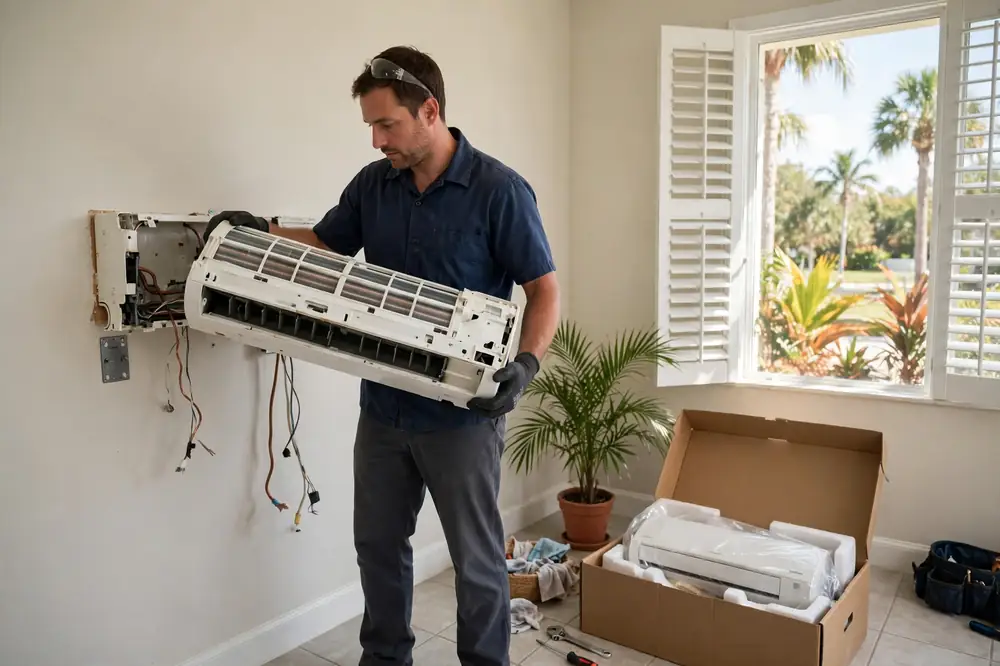
When a ductless unit is old, undersized, or failing more often than it runs, replacement is the honest answer. The new unit is sized to the room by a load check, the line set and drain are checked, and the outdoor unit is anchored for hurricane wind.
Need help with mini split?
Call Now to reach a local mini split professional. Describe the room, the system, and what is happening.
Hours: Mon–Fri 7:00 AM–10:00 PM ET · Sat 8:00 AM–10:00 PM ET · Sun 7:00 AM–9:00 PM ET
What this service does
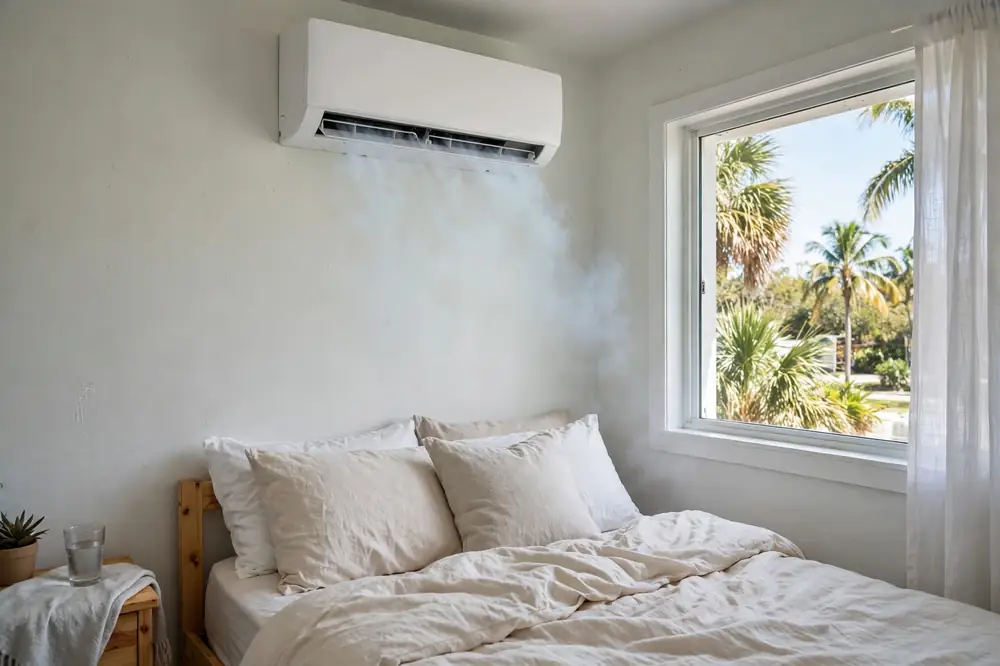
A mini split does not last forever, and in Cape Coral, FL the climate shortens the list of things that wear out first. Salt air works on the outdoor coil and cabinet, humidity works on the drain and the indoor coil, and a unit that runs most of the year racks up more hours than the same unit would in a milder climate. The signs of a unit reaching the end of its useful life are steady, not sudden: cooling that weakens year by year, a room that never quite reaches the set temperature on hot afternoons, noises that were not there before, and repairs that come more often and cover more parts.
Replacement is different from repair in one important way: it is the moment to fix the sizing. Many of the units being replaced in Cape Coral, FL were sized by guesswork — copied from a neighbour, chosen from a chart, or matched to the old unit. If the old unit short-cycled and left the room clammy, it was probably oversized. If it ran all day and never caught up, it was probably undersized. A replacement starts with a fresh load check, so the new unit is sized to the room as it is now — including any changes since the old unit went in, such as new windows, added insulation, or a room that changed use.
The refrigerant change is the second reason replacements are common now. R32 is the current-generation refrigerant for new ductless systems, following the 2025 transition away from R410A. An older R410A system can still be repaired, and parts remain available, but when a major component fails on an older system, the comparison is between a repair on an ageing unit and a new system on the current refrigerant with a fresh manufacturer parts coverage period. The R32 post on this site explains the transition in plain terms.
A replacement also reopens the permit question. A swap is not a like-for-like handyman job: in Florida, replacing an air conditioning system needs a mechanical permit, and the electrical work needs its own permit where a new circuit or disconnect is involved. The permits are pulled before the work starts, and the inspection closes them after. The old unit is removed, the refrigerant is recovered, and the line set, drain and electrical are checked before the new unit goes in — because a new unit on a damaged line set inherits the old unit problems.
Before you call
- Note which room the unit serves and what it is doing — or not doing.
- Check the remote: mode, temperature setting, and whether the display responds.
- Look at the indoor filter and the outdoor unit for leaves, dirt or standing water.
- Note when the problem started and whether it followed a storm or a power outage.
- Check whether your HOA or condo association needs to approve outdoor equipment.
How mini split replacement works in a Cape Coral, FL home
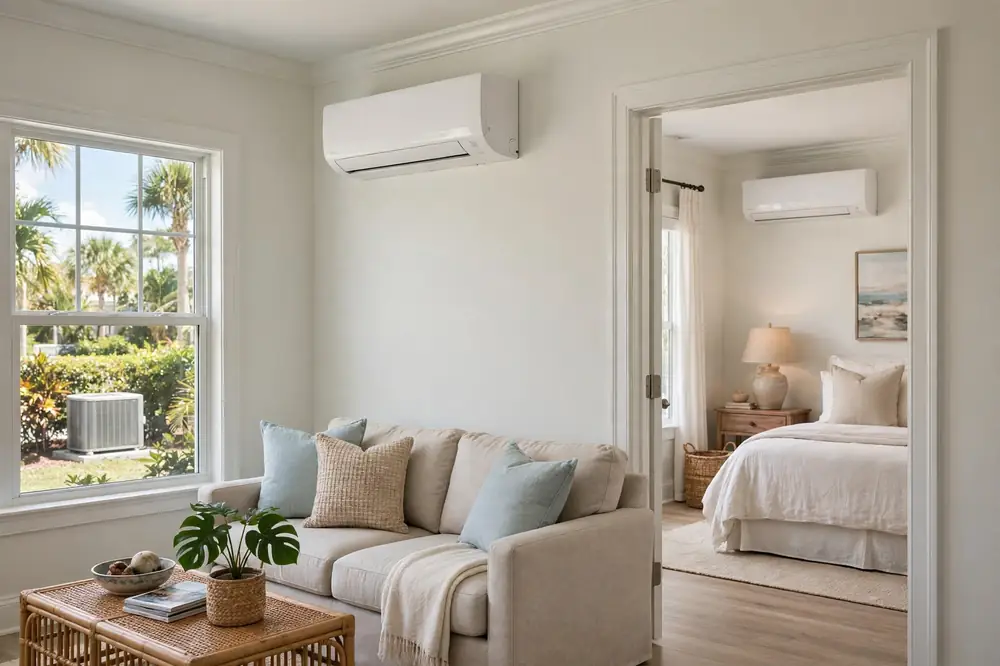
The job starts with the same assessment as a new install, because the room may have changed since the old unit went in. The room is measured again, the windows and sun exposure are checked, and the load is calculated fresh. A room that gained a glass door, lost a shade tree, or changed from a bedroom to a home office needs a different size than the one the old unit was chosen for. The assessment also looks at what is reusable: the wall opening, the line set route, the drain route, the electrical circuit, and the outdoor unit pad or bracket.
The old unit comes out first, and the refrigerant is recovered — never vented. The indoor unit is removed from the wall, the line set is disconnected, and the outdoor unit is lifted off its pad or bracket. The wall opening is inspected, the drain is checked for clogs and for the right fall, and the electrical circuit and disconnect are tested. If the line set is damaged, kinked or the wrong size for the new unit, it is replaced rather than reused; a new unit on a compromised line set is a repair waiting to happen.
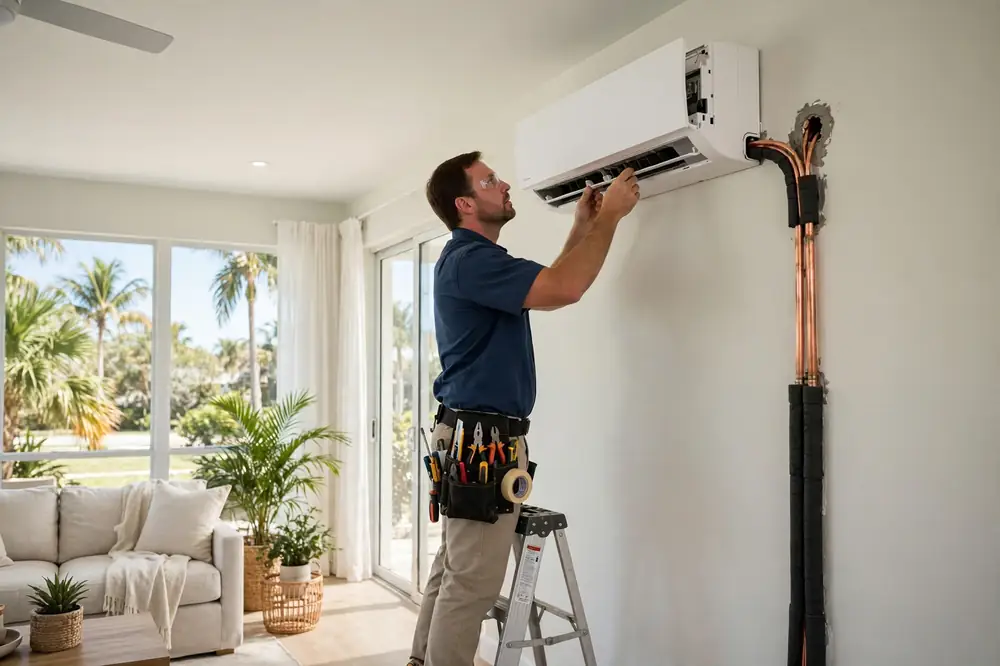
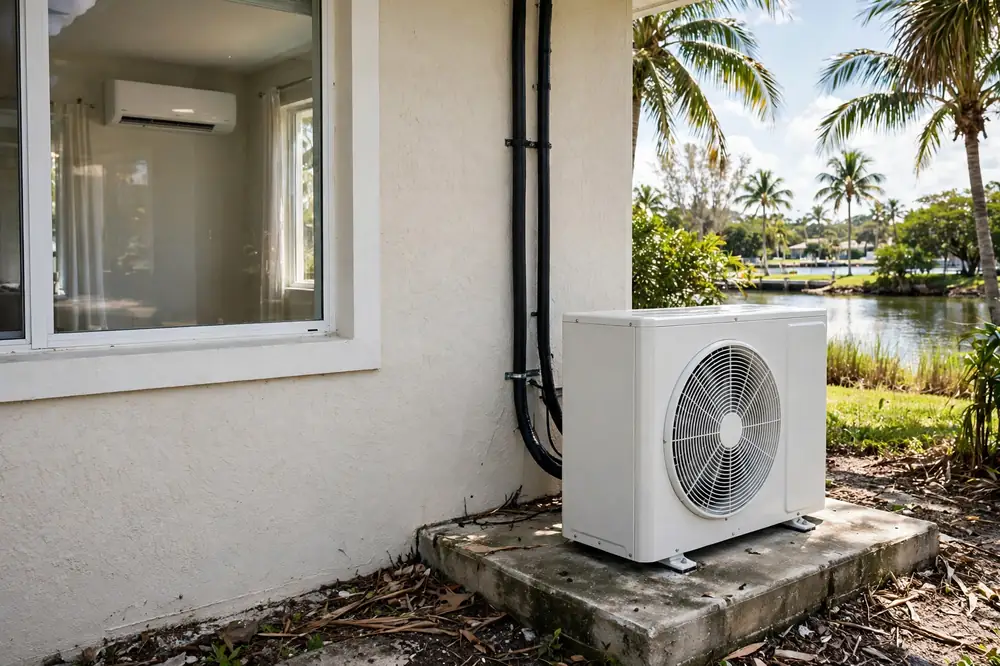
The new unit goes in the same way as a new install, with one difference: the mounting and the routes already exist, so the work is faster. The indoor unit is mounted — in the same spot if the spot was right, in a better spot if it was not — the line set and drain are run, and the outdoor unit is set on the pad or bracket. In Cape Coral, FL the outdoor unit gets coastal corrosion protection and wind-rated anchoring, and it is elevated above expected flood levels where the site allows. The same salt-air and hurricane rules apply to a replacement as to a new install.
Testing is the same as a new install, and it matters more, because the job is being compared with the unit it replaced. The line set is pressure-tested, vacuumed and charged, and the system is run through Cool, Heat and Dry modes while airflow, temperature drop and the drain are checked. The remote is explained again — modes change between generations, and Dry mode is the one most owners never used on the old unit. The inspection is arranged, and the permit is closed only after the inspector has seen the work.

What the service includes
Fresh load check
The room is measured and the load is calculated again, so the new unit is sized to the room as it is now — not copied from the old unit.
Old unit removal and refrigerant recovery
The old indoor and outdoor units are removed, and the refrigerant is recovered rather than vented.
Line set, drain and electrical check
The line set, drain route, electrical circuit and disconnect are inspected and tested before the new unit goes in.
New indoor unit mounting
The new indoor unit is mounted — in the same spot if the spot was right, in a better spot if it was not.
New outdoor unit, anchored and elevated
The new outdoor unit is set on the pad or bracket, anchored to a wind-rated mount, and elevated above expected flood levels where the site allows.
Salt-air protection
Coastal corrosion protection on the new outdoor unit for homes near the Gulf and the saltwater canals.
Pressure test, vacuum and charge
The line set is pressure-tested, vacuumed and charged with the current-generation refrigerant.
Testing in every mode
Cool, Heat and Dry modes are run and checked, and the remote and the modes are explained at handover.
Permit and inspection
Mechanical and electrical permits are pulled before work starts, and the inspection is arranged after.
How the work runs
Call and describe the old unit
How old it is, what it does wrong, how often it has needed repair, and whether it ever cooled the room well.
Assessment and sizing
The room is measured and the load is checked fresh, so the new unit is sized to the room as it is now.
Permits
Mechanical and electrical permits are pulled before work starts.
Removal
The old units come out and the refrigerant is recovered. The line set, drain and electrical are checked.
Installation
The new indoor and outdoor units go in, anchored, elevated and connected.
Testing and handover
The system is tested in every mode, the remote is explained, and the inspection is arranged.


Tools and methods used
Load calculation
A fresh room-by-room load check that turns the room as it is now into the right unit size.
Refrigerant recovery machine
Recovers the refrigerant from the old system into a cylinder, so nothing is vented.
Nitrogen pressure test
The line set is filled with nitrogen and held at pressure, so a leak shows up before refrigerant goes in.
Vacuum pump and micron gauge
A vacuum pump pulls air and moisture out of the line set, and a micron gauge confirms the vacuum holds.
Refrigerant gauges
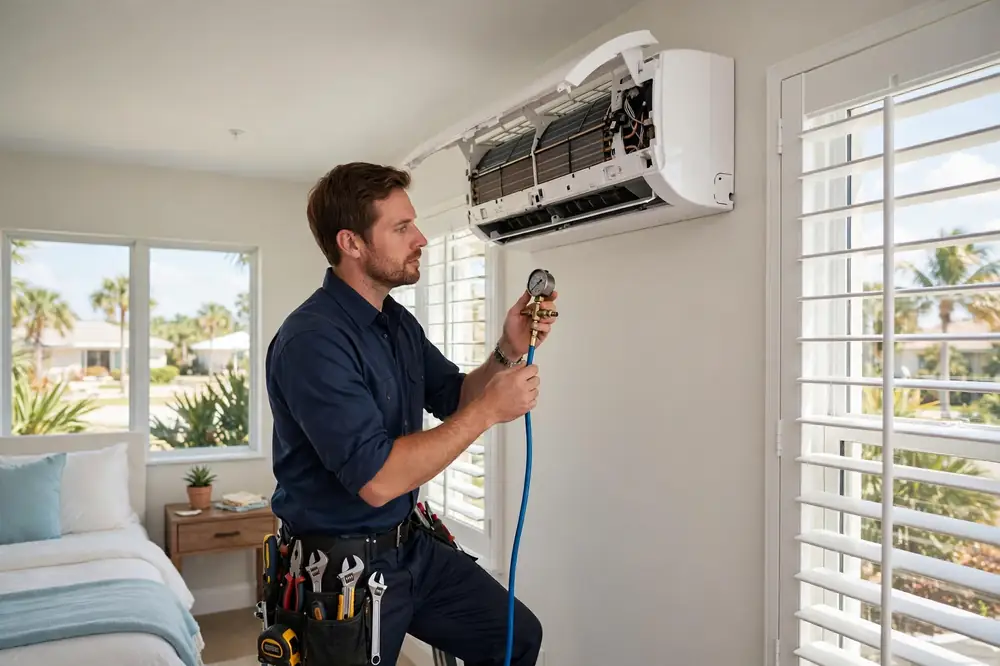
Gauges read the system pressures while the new unit runs, confirming the charge is right.
Torque wrenches and flaring tools
Flaring tools shape the copper line ends, and torque wrenches tighten the flare nuts to the right tension.

Repair or replace: how the decision is made
The repair-or-replace decision turns on three things: age, symptoms and history. A young unit with one clear fault — a failed sensor, a clogged drain, a dirty coil — is a repair. An old unit with weakening cooling, rising repair frequency and a major component failure is a replacement. The middle ground is where the assessment matters: a mid-life unit that cools weakly after cleaning may be undersized rather than failing, and the answer may be a replacement sized correctly rather than another repair on a unit that never fit the room.
Salt air moves the decision earlier in Cape Coral, FL than it would inland. An outdoor coil corroded by salt air, with fins crumbling or refrigerant leaks at the coil, is not a component that comes back with a cleaning. Florida HVAC sources put unprotected coil life at 3 to 7 years within 10 to 15 miles of salt water, and a coil that has spent a decade on a Gulf-access canal has lived a hard life. The replacement post on this site covers the signs in full.
What changes with the new system
A new ductless system brings three changes that the old unit did not have. First, the refrigerant: R32 is the current generation, and the new system is designed around it. Second, the controls: modes, remotes and Wi-Fi control have changed between generations, and the handover explains what the new remote does — including Dry mode, which many owners never used on the old unit. Third, the sizing: the new unit is sized to the room as it is now, by a load check, so the clammy short-cycling or the all-day running of the old unit does not carry over.
The manufacturer parts coverage period also restarts with a new system. What it covers, and for how long, depends on the system and on the installation being done to the manufacturer instructions and the permit being closed — which is why the pressure test, the vacuum, the charge and the inspection are part of the job, not extras. Keep the paperwork: the permit, the inspection record and the handover notes are the record of the install.
A ten-year-old ductless unit in a Cape Coral lanai that cools weakly, short-cycles, leaves the room clammy, and has needed three repairs in two years.
A room that stays warm, damp or noisy does not fix itself — and the cause is usually small: a dirty filter, a clogged drain, or a unit sized wrong for the room.
A new unit sized to the lanai by a fresh load check, on a checked line set and drain, anchored and elevated, running steadily through Cool, Heat and Dry modes.
The work is checked in the room, at the thermostat and at the outdoor unit — not guessed from the driveway.
Guides and posts that go with mini split replacement
Signs your mini split needs replacing, not another repair
- Cooling that weakens year by year, even after cleaning and service.
- A room that never reaches the set temperature on hot afternoons.
- Repairs that come more often and cover more parts each time.
- A unit that short-cycles and leaves the room clammy — the sign of a unit sized wrong for the room.
- An outdoor coil corroded by salt air, with fins crumbling or refrigerant leaks at the coil.
- A system on the older refrigerant with a major component failure.
- A unit that is loud in a way it never was — a worn fan motor or compressor.
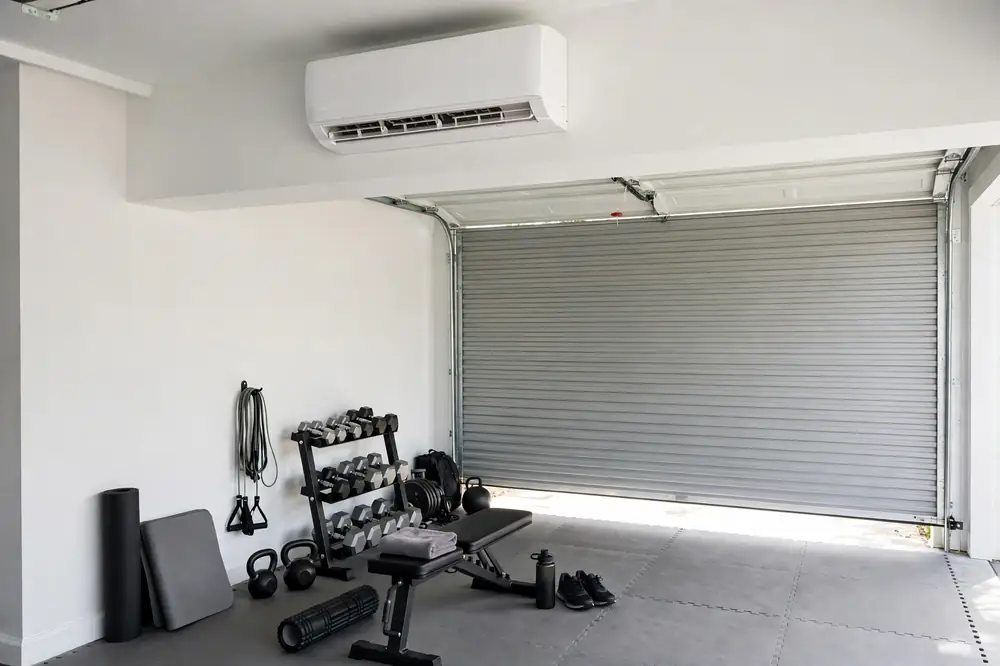
- A room that changed use — a bedroom turned office, a garage turned living room — and the old unit no longer fits it.


Related guides
Mini split sizing guide · R32 refrigerant · Mini split vs central AC in Florida
Industries that use this service
Residential · Property Management · Real Estate · All industries →
Frequently asked questions
Questions people ask about mini split replacement, answered plainly.
When the unit is old, the cooling weakens year by year, repairs come more often and cover more parts, or a major component fails on an older system. The comparison is between a repair on an ageing unit and a new system sized to the room, on the current refrigerant, with a fresh manufacturer parts coverage period. The assessment on the call looks at the age, the symptoms and the repair history.
Sometimes. The line set is inspected before the new unit goes in: its size, its condition, and whether it is kinked or damaged. If it is the right size and in good condition, it can be reused after a pressure test and a vacuum. If it is damaged, kinked or the wrong size, it is replaced — a new unit on a compromised line set inherits the old unit problems.
Yes. Replacing an air conditioning system needs a mechanical permit in Florida, and the electrical work needs its own permit where a new circuit or disconnect is involved. The permits are pulled before the work starts, and the inspection closes them after. The permit guide on this site explains the full picture.
The old indoor and outdoor units are removed, and the refrigerant is recovered into a cylinder with a recovery machine — never vented. The old equipment is taken away as part of the job.
Usually not. R32 is the current-generation refrigerant for new ductless systems, following the 2025 transition away from R410A. The new system is charged with the refrigerant it was designed for, and the line set is pressure-tested and vacuumed before the charge goes in. See the R32 post on this site.
Yes, and replacement is the right moment to do it. If the old indoor unit blew air onto the bed, sat behind a curtain, or could not throw air across the room, the new unit can go in a better spot, with a new line-set route to match. The assessment looks at the room fresh, not just at the old mounting holes.
By a fresh load check on the room as it is now — size, ceiling height, windows and sun, insulation, and how the room is used. The old unit size is not copied, because the old unit may have been sized wrong in the first place, and the room may have changed since it went in.
Mini split trouble in your Cape Coral home?
Call Now to reach a local mini split professional. Describe the room, the system, and what is happening.
Call now for mini split help
Tap Call Now to reach a local mini split professional. Tell them which room, what the unit is doing, and when it started.
Hours: Mon–Fri 7:00 AM–10:00 PM ET · Sat 8:00 AM–10:00 PM ET · Sun 7:00 AM–9:00 PM ET
Before you call
- Note which room the unit serves and what it is doing — or not doing.
- Check the remote: mode, temperature setting, and whether the display responds.
- Look at the indoor filter and the outdoor unit for leaves, dirt or standing water.
- Note when the problem started and whether it followed a storm or a power outage.
- Check whether your HOA or condo association needs to approve outdoor equipment.