
R32 Refrigerant and Your Mini Split
R32 is the current-generation refrigerant for new ductless systems, following the 2025 transition away from R410A. This post explains the transition in plain terms — what it means for a repair, what it means for a replacement, and what it does not mean.
Cape Coral Mini Split Pros · 2026-11-18 · Refrigerant
The short version
Problem: R32 is the current-generation refrigerant for new ductless systems, following the 2025 transition away from R410A.
What to do: An older R410A system can still be repaired, and parts remain available.
When to call: A new system is charged with the refrigerant it was designed for — the two are not mixed.
What refrigerant does
Refrigerant is the fluid that carries heat around a mini split. It circulates in a loop between the indoor unit and the outdoor unit, changing state as it goes: cold and low-pressure inside, where it absorbs heat from the room air, and hot and high-pressure outside, where it releases that heat into the outdoor air. The refrigerant is what moves the heat, and the compressor is what moves the refrigerant. Without refrigerant, the system is a fan.
The refrigerant is sealed in the system — the copper lines, the coils, the compressor — and it does not get used up. A system that is low on refrigerant has a leak, and the leak is the fault, not the refrigerant. A recharge without a leak repair is a temporary fix: the unit will be low on refrigerant again within weeks, because the refrigerant is still escaping through the same leak.
R410A and R32: the transition
R410A was the refrigerant for ductless systems for two decades, and R32 is the current generation, following the 2025 transition away from R410A. The transition is driven by the refrigerant global warming potential: R32 has a lower global warming potential than R410A, and the regulations that govern refrigerants have moved the industry to it. New ductless systems are designed for R32, and new systems are charged with R32.
The transition does not make an R410A system obsolete overnight. An older R410A system can still be repaired, and parts remain available — the refrigerant, the components, and the tools to work on them. What the transition does change is the comparison when a major component fails on an older system: the repair is on an ageing unit on the older refrigerant, and the replacement is a new system on the current refrigerant with a fresh manufacturer parts coverage period.
Can the two refrigerants be mixed
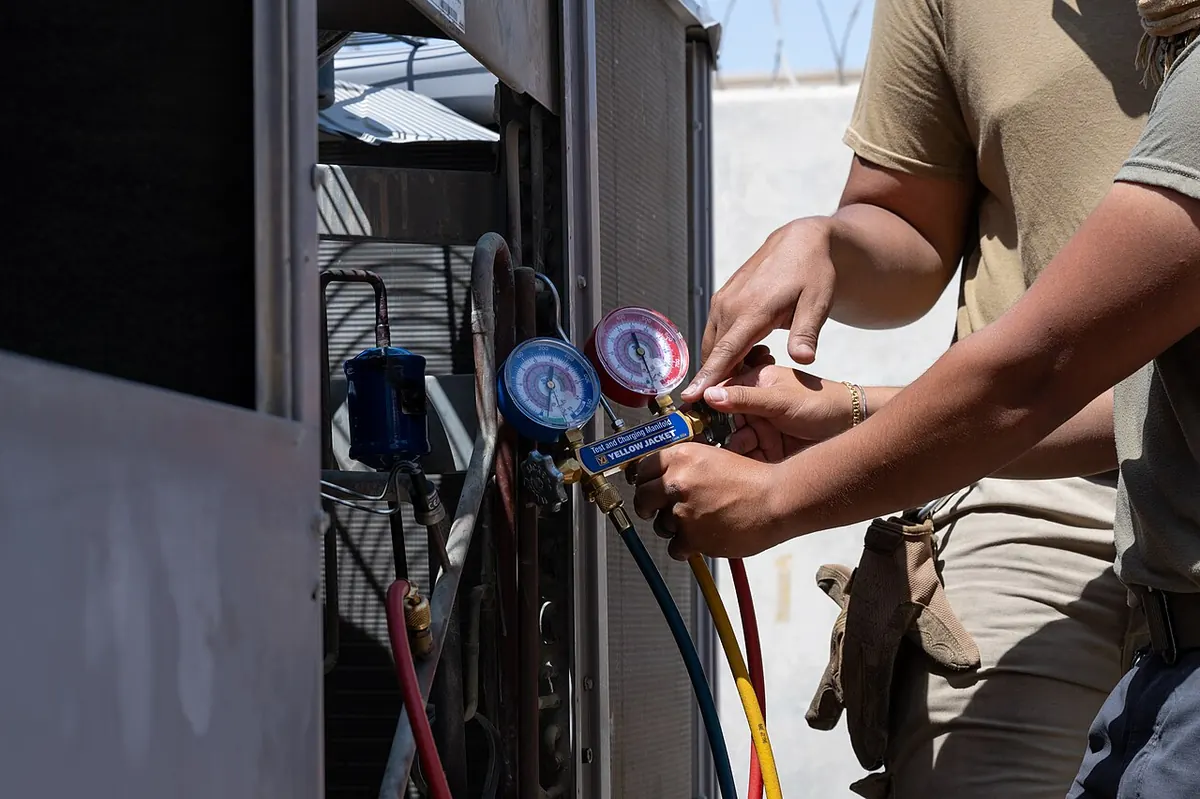
No. A system is charged with the refrigerant it was designed for, and the two are not mixed. R32 and R410A run at different pressures, use different oils, and need different components — the compressor, the expansion valve, and the controls are designed for one refrigerant, not for both. A system designed for R410A is charged with R410A. A system designed for R32 is charged with R32. The line set is pressure-tested and vacuumed before the charge goes in, and the charge is the refrigerant the system was designed for.
A replacement that changes the refrigerant is a new system, not a conversion. The old unit comes out, the refrigerant is recovered, and the new unit goes in — on a checked line set and drain, with a fresh pressure test, vacuum and charge. The replacement page on this site explains the job in full, and the repair page explains the diagnosis order when the refrigerant is low.
What R32 means for a repair
A repair on an R410A system is the same repair it always was: the diagnosis, the part, the pressure test, the vacuum and the recharge with R410A. The refrigerant is available, the parts are available, and the tools are the same. A repair on an R32 system is the same job with a different refrigerant — the pressures are different, the charge is different, and the safety rules are different, because R32 is mildly flammable and the work follows the handling rules for it.
The repair-or-replace decision does not turn on the refrigerant alone. It turns on the age of the unit, the symptoms, and the repair history: a young unit with one clear fault is a repair, whatever the refrigerant. An old unit with weakening cooling, rising repair frequency and a major component failure is a replacement, whatever the refrigerant. The refrigerant is one factor in the comparison, not the decision.
What R32 means for a replacement
A replacement is a new system on the current refrigerant, and the new system is designed around R32. The new unit is sized to the room by a fresh load check, the line set and drain are checked, and the outdoor unit gets coastal corrosion protection and wind-rated anchoring. The system is pressure-tested, vacuumed and charged with R32, and run through Cool, Heat and Dry modes while airflow, temperature drop and the drain are checked.
The manufacturer parts coverage period also restarts with a new system. What it covers, and for how long, depends on the system and on the installation being done to the manufacturer instructions and the permit being closed — which is why the pressure test, the vacuum, the charge and the inspection are part of the job, not extras. Keep the paperwork: the permit, the inspection record and the handover notes are the record of the install.
The safety rules for R32
R32 is mildly flammable, and the work on an R32 system follows the handling rules for it. The system is pressure-tested with nitrogen before the charge goes in, vacuumed to remove air and moisture, and charged with the right amount of refrigerant — too much or too little, and the system does not run right. The work is done by someone who knows the refrigerant and the rules, and the permits are pulled before the work starts.
The safety rules are also the reason the refrigerant is never vented. The old refrigerant is recovered into a cylinder with a recovery machine, whether it is R410A or R32, and the new system is charged with the refrigerant it was designed for. The recovery is part of the replacement job, and the old equipment is taken away as part of it. The replacement page on this site explains the removal and the recovery.
The refrigerant and the permit
The refrigerant does not change the permits. A mini split install needs a mechanical permit and usually a separate electrical permit, whether the system is charged with R32 or with R410A, and the permits are pulled before work starts. The inspection closes them after, and the inspector checks the mounting, the line set and drain, the electrical circuit and disconnect, and the anchoring of the outdoor unit. The refrigerant is one line in the handover notes, not a separate permit.
The refrigerant does change the record. The handover notes record the refrigerant the system was charged with, the size of the unit, and the date of the install — so a technician years later knows what system is in the house without opening it first. The old refrigerant is recovered into a cylinder with a recovery machine when a system is replaced, whether it is R410A or R32, and the old equipment is taken away as part of the job. The replacement page on this site explains the removal and the recovery.
Related: Mini split replacement · How a mini split works · mini split help in Cape Coral, FL
Related reading
 Troubleshooting
Mini Split Not Cooling in Cape Coral, FL
A mini split that will not cool in Cape Coral, FL is usually telling the truth about a short list of faults. This post walks through the causes in the order they are checked — mode, filter, coil, drain, then refrigerant.
 Choosing
 a Mini Split Installer in Cape Coral, FL
Choosing a mini split installer in Cape Coral, FL is choosing someone who does a load check, pulls the permits, protects the outdoor unit from salt air, and anchors it for hurricane wind. This post explains what to ask before the work starts.
 Heating
Mini Split Winter Heating in Florida
Cape Coral, FL winters are mild, and a ductless heat pump heats efficiently when the outdoor temperature is mild. This post explains the Florida winter, the heat pump, and the rooms that need heating as well as cooling.
Frequently asked questions
Questions people ask about this topic, answered plainly.
R32 is the current-generation refrigerant for new ductless systems, following the 2025 transition away from R410A. It has a lower global warming potential than R410A, and new ductless systems are designed for it. This post explains the transition in plain terms.
Yes. An older R410A system can still be repaired, and parts remain available — the refrigerant, the components, and the tools to work on them. The transition does not make an R410A system obsolete overnight. What it changes is the comparison when a major component fails on an older system.
No. A system is charged with the refrigerant it was designed for, and the two are not mixed. R32 and R410A run at different pressures, use different oils, and need different components. A system designed for R410A is charged with R410A; a system designed for R32 is charged with R32.
Yes. New ductless systems are designed for R32, following the 2025 transition away from R410A. The new system is charged with the refrigerant it was designed for, and the line set is pressure-tested and vacuumed before the charge goes in. The installation page explains the job in full.
R32 is mildly flammable, and the work on an R32 system follows the handling rules for it — the pressure test, the vacuum, and the charge are done by someone who knows the refrigerant and the rules. The system is sealed, and the refrigerant stays in the system unless there is a leak. The safety rules are part of the install, not an extra.
It is recovered into a cylinder with a recovery machine — never vented — whether it is R410A or R32. The old indoor and outdoor units are removed, and the old equipment is taken away as part of the job. The replacement page on this site explains the removal and the recovery.
Not because of the refrigerant alone. The repair-or-replace decision turns on the age of the unit, the symptoms, and the repair history: a young unit with one clear fault is a repair, whatever the refrigerant. An old unit with weakening cooling and a major component failure is a replacement. The replacement page explains how the decision is made.
Still have questions?
Call Now to reach a local mini split professional — describe the room, the system, and what is happening.
Call now for mini split help
Tap Call Now to reach a local mini split professional. Tell them which room, what the unit is doing, and when it started.
Hours: Mon–Fri 7:00 AM–10:00 PM ET · Sat 8:00 AM–10:00 PM ET · Sun 7:00 AM–9:00 PM ET
Before you call
- Note which room the unit serves and what it is doing — or not doing.
- Check the remote: mode, temperature setting, and whether the display responds.
- Look at the indoor filter and the outdoor unit for leaves, dirt or standing water.
- Note when the problem started and whether it followed a storm or a power outage.
- Check whether your HOA or condo association needs to approve outdoor equipment.